
Daddy Issues
SENTIMENTAL VALUE, JAY KELLY and HAMNET: when creativity gets in the way of being a good father

American films and the last three presidential elections would make us believe that nothing says Thanksgiving and the Christmas holidays more than a nice get together with your dysfunctional family. And so, in keeping with this festival season, I give you three movies about paternal units in the arts and the wreckage they cause. Sentimental Value and Jay Kelly are currently playing theatrically; Jay Kelly will also begin streaming on Netflix on December 5. And even though the family at the gear of Hamnet is not entirely dysfunctional (at least not by our modern standards), it also features some of the same resentments and pain caused by an absentee father who happens to be an artist.
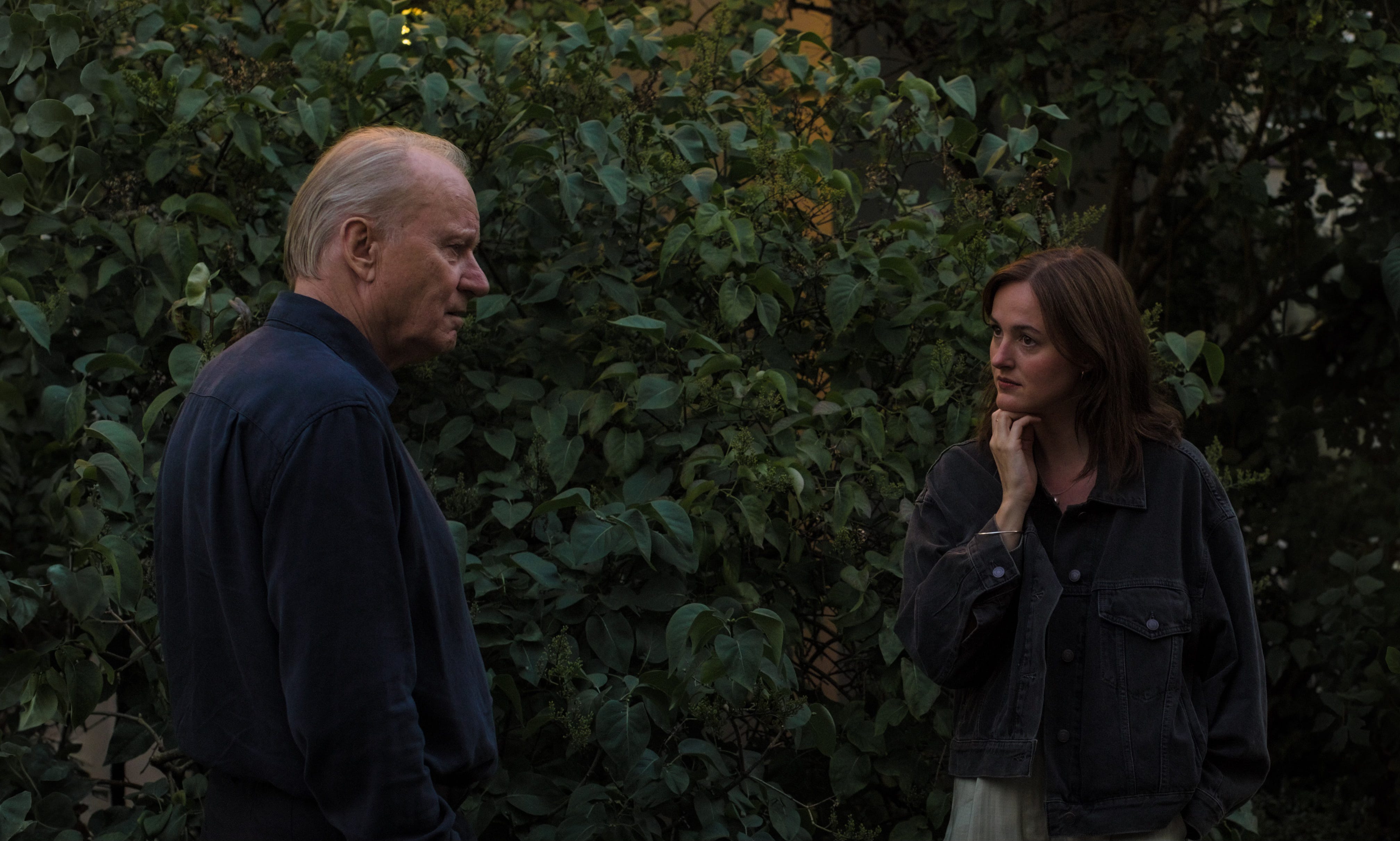
SENTIMENTAL VALUE
It may sound like a cliché to write that Sentimental Value is the type of film that grows on you, that the more you revisit it the more you will get out of it. But it is true. The writing is exquisite, the performances are superb, and the cinematography and editing are deceitfully straightforward, at the service of the story and the complex relationships we see unfold on screen. One viewing alone doesn’t do Joachin Trier’s new film justice.
The movie opens in a fairy tale-like house in the center of Oslo where several generations of the Borg family have lived, its rooms still fully furnished. Veteran Norwegian actress Bente Børsumt’s lyrical voice-over depicts it as a living entity, a witness to the many joys and sorrows and tragedies that have shaken the very foundations of this family (an actual crack running from foundation to ceiling), its walls and even furnace the ears of every single argument and laughter.
The story proper begins on stage as Nora (Renate Reinsve), the oldest daughter of legendary director Gustav Borg (Stellan Skarsgard), is struck with a severe case of stage fright just as the curtains are about to rise on opening night of an experimental play where she plays the lead. The sequence is magnificent, a steadicam following Nora from dressing room to backstage as the production’s director, technicians and even fellow actors try to find ways to help her defeat her anxiety (Nora even asks an actor she’s having an affair with for a quickie to get her out of it).
Gustav, who abandoned both her and her sister Agnes (Inga Ibsdotter Lilleass) years ago to pursue his filmmaking career, makes an unexpected (and uninvited) appearance at their family home during a memorial for their recently deceased mother, not out of respect but because he has an offer for Nora he expects she won’t refuse: the lead in his next film, one that would mark a major comeback after years of not shooting a single foot of celluloid. The film is loosely based on the life of his own mother, who was arrested and tortured by the Nazis for her participation in Norway’s resistance, and committed suicide when Gustav was a young boy. Nora turns him down without even reading the script.
Gustav meets A-list American Rachel Kemp (Elle Fanning) at a retrospective of his work organized by a film festival; more specifically, he meets her after a screening of a film featuring Agnes in the lead role of an orphan girl during the Nazi occupation of Norway. Rachel wants to work with him and so he offers her the role Nora turned down and announces to his daughters that he will shoot the film in the family home. This does not sit well with Nora, although Agnes is far more understanding…that is, until Gustav tells her that he would like to cast her son Erik to play a facsimile of him as a child. The proud grandfather wants to make Erik a future cinephile by gifting him with DVDs of films by Gaspar Noe and Michael Haneke, among others. In Rachel, he sees a surrogate to Nora, an opportunity to bestow on someone the love that he denied his own daughter, to make amends through his art.
This brief synopsis barely does justice to Sentimental Value’s intricate, detailed, subtle and yet emotionally charged storytelling and how it quietly subverts our expectations. Trier juggles with ease a multitude of themes: aging, parenthood, the weight of the past and our memories, art. Actions do have consequences in Sentimental Value and we watch them play out in the form of old resentments, a visit to the National Archives, the sharp, smart questions Rachel asks of her director and, last and certainly not least, on Reinsve’s face, sometimes full of rage, sometimes full of an overwhelming sadness, always processing, aware that she is walking down an emotionally wrought tightrope.

JAY KELLY
Jay Kelly (George Clooney) is another filmmaking Dad: this time a Hollywood A-lister, best known for his action films, who is now approaching middle age and whose relationships with his grown daughters and aging father leave a lot to be desired. He is the kind of actor who strongly believes he can deliver a stronger take than the one he just shot even if the director thinks otherwise. Jay Kelly has created a surrogate family of sycophants, agents, hair stylists and business managers who are asked to drop everything they are doing at the last minute, at the expense of their own family lives, because, hey, he IS Jay Kelly. How can you say no to that charming, multi-million dollar smile (especially when your next paycheck depends on it)?
Kelly has just finished shooting his latest film when he receives a double whammy of bad news: his youngest daughter won’t spend the summer with him, preferring to spend time with her friends in Europe before she goes to college; and his former protege has passed away after Kelly turned down his request to finance his next film. To make things worse, Kelly becomes involved in a nasty altercation after his mentor’s funeral with an old acting school classmate who accuses him of stealing the role that ultimately made Kelly the star he is today…an incident recorded on video and that has the potential of going viral. Kelly also is having second thoughts on the film he is supposed to shoot next.
So, how does he face this middle age crisis? By having one of his interns find out where his daughter is heading and asking his manager Ron (Adam Sandler) to tell a film festival in Tuscany that he will after all accept the Career Achievement Award he turned down. So, it’s off to Europe for Kelly, Ron, Kelly’s manager Liz (Laura Dern), his hair stylist (Emily Mortimer) who is this close to losing a gig with French president Macron, and the rest of his entourage. All fun and giggles, right? Well, not quite as director and co-writer Noah Baumbach decides to turn the train Kelly is traveling into a stage where he will revisit his many regrets using that old film trick of stepping through a door into another moment in time, whether it be an actual film soundstage or a classroom or a phone conversation with his oldest daughter that transforms into an in person one with her…in the middle of a forest.
Jay Kelly is a more benign, user friendly version of similar dysfunctional parents from Baumbach’s previous films (think 2005’s The Squid and the Whale, 2017’s The Meyerowitz Stories and 2019’s Marriage Story). Part of my problem with the film lies in the casting of Clooney: his screen persona, his public image, too often gets in the way of his performance. We can’t separate the character from the actor portraying him, becoming as much a distraction as the game of “identify that voice” we so often play with Pixar’s or Dreamworks’ animation films. Whereas the storytelling in Sentimental Value is cohesive, deep, empathetic, here, the storytelling is all over the place, it lacks focus, it replaces nuance with noise and activity and not-so-clever filmmaking.
The movie is made more than bearable by Adam Sandler’s and Laura Dern’s performances. Although I’ve never been a big fan of Sandler’s early comedies, I have to admit that I am a softie for his more gentle, family-friendly ones, especially those co-starring Drew Barrymore. But compare his performance as Ron with his performance in the Safdie’s brother Uncut Gems, one in which Sandler embraces and explodes the dark side of the man-child he has played in the past. As Ron, Sandler not only taps into his paternal side; there is also patience, here. This is a man who takes far too many deep breaths before facing a situation head on, even when he is forced to improvise. He understands how fickle human nature can be. But even a patient man has his limits; and yet, not once do we see Ron lose his cool the way many of Sandler’s characters have in the past. Sandler pretty much saves the film from itself. And then there’s Laura Dern as the harried Liz (who turns out to be Ron’s former romantic partner). Where Ron is zen-like, Liz is all high strung, frustrated at her client’s erratic behavior, wondering whether it’s all worth it. Jay Kelly is worth recommending thanks to these two performances.
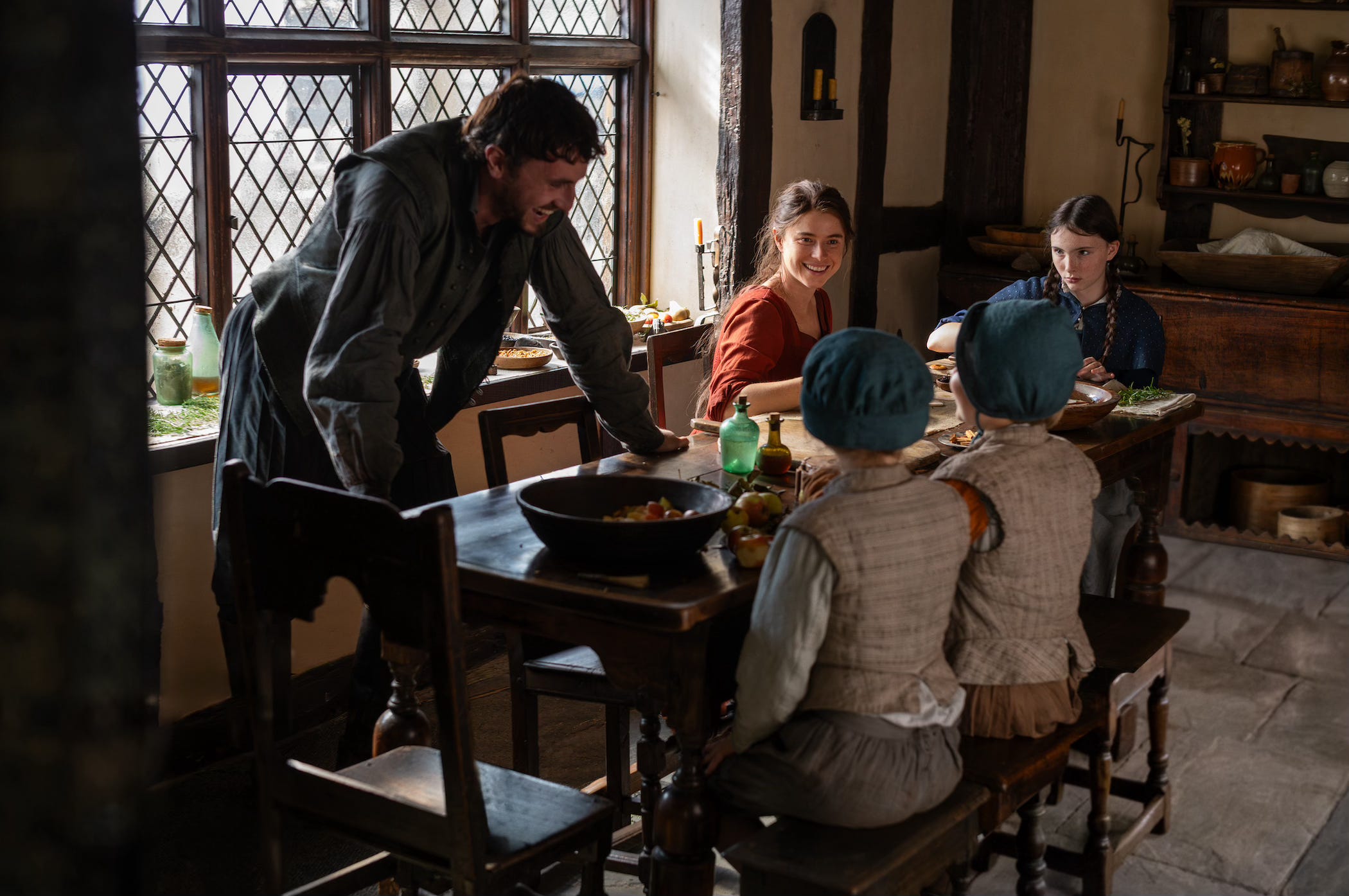
HAMNET
After the pummeling she received for Marvel’s The Eternals (which I still think has some redeeming qualities), Chloé Zhao returns to her indie roots with another high profile film released by Focus Features, a unit of Universal Pictures which is owned by Comcast. Yes, I am being a bit facetious here, but let’s be honest, after Songs My Brothers Taught Me (2015), The Rider (2017) and Nomadland (2020), one can’t help but feel that she is playing it safe by adapting an award-winning novel and casting two of Ireland’s most uncompromising and hottest actors in the lead roles of Agnes and her husband William Shakespeare (both the novel and the film want to play coy with its audience, but come on, even the title gives it away).
Based on Maggie O’Farrell’s 2008 novel (O’Farrell co-wrote the film with Zhao), Hamnet purports to tell the story of how one of Shakespeare’s most often produced plays came to be. Yes, expect liberties to be taken. Historical accuracy is not the endgame here. Squeezing every single drop out of your tear ducts is.
Hamnet follows both William Shakespeare (Paul Mescal) and future wife Agnes (Jessie Buckley) from courtship to marriage. Agnes is presented to us as a child of nature, running wild among the fields, seeking comfort in the womblike hole created by the roots of a very large tree, mixing and matching herbs that can cure any ailment. She is defiant, assertive, a free spirit who manages to catch the eye of William one afternoon as he tutors a couple of wealthy kids on the fine arts of writing and speaking Latin, a job he took on to pay his abusive father’s debts (David Wilmot). They court, they marry (in spite of Bill’s parents’ objections) and they have children. Agnes gives birth to her eldest daughter Susanna in the forest in the purest Pagan tradition but is years later forced to give birth to her twins inside the Shakespeare home by her mother-in-law (Emily Watson). Agnes is so free-thinking that she even encourages Will to leave for London where she knows he will find inspiration for his writing as she takes care of the kids.
The twins Hamnet (Jacobi Jupe) and Judith (Olivia Lynes) love to dress as each other to fool their parents, a game that eventually costs Hamnet his life as he decides to share his ailing sister’s bed in hopes to fool death. Death does claim him. Agnes’s and Susanna’s (Bodhi Rae Breathnach) discovery of Hamnet’s body is perhaps the most harrowing in the film: Agnes’ ear-shattering screams as she cradles his body, the intensity of her despair and pain are simply heartwrenching.
Hamnet’s death leads to resentment and to Shakespeare writing and staging Hamlet with Agnes accidentally finding herself in the audience. And even though the film, in its defense of the healing power of the arts, inevitably ends with Hamlet I couldn’t help but think that in doing so, they let a man’s voice take over and dominate what is essentially a woman’s story, told from a woman’s point of view. That it somehow curtails Agnes’ journey and pain, no matter how much Shakespeare’s words ends up offering her, and the audience surrounding her, succor and closure. The fact that the actor playing Hamlet is Noah Jupe, Jacobi’s older brother, drives home the point with the subtlety of a sledgehammer.
I also find it disappointing that Agnes’ almost Druidic connection to the earth was immediately dropped after the film’s first half. Zhao is so insistent with her verdant imagery that I somehow expected some sort of crisis as Agnes tries to come to terms with the fact that the herbs that she is so fond of, that the knowledge that she inherited from her mother amounted to naught when it came to her child’s life. Nope, the film is far more interested in Agnes’s (justifiable) anger towards her absentee husband. Equally unforgivable is that for a film called Hamnet, we never get enough of him.
Jessie Buckley’s raw, powerful and visceral performance almost makes up for all these faults. Her smile, that slightly skewed Jessie Buckley smile, when she first meets Shakespeare or as she stares at him, wondering where did this creature come from is simply magical. Her pain and joy as she gives birth to her children, and the sheer pleasure of being a mother prepares us for that devastating scene. Then comes that angry resentment, especially when she finds out her husband is using her child’s name for his new play. And, finally, her face, full of awe and pain and understanding as she realizes what will was up to. Her final act of closure encapsulates how Jessie uses her entire body to portray this force of nature. If there’s one performance that one could describe as a rollercoaster ride, it’s this one.
Now, if somebody would actually write, produce and direct a film about the real Agnes Shakespeare (whose name actually was Anne Hathaway; Agnes was the name her father used in his will) who happened to be quite an interesting and powerful woman…