
Angry Young Critter
HOPPERS is a surprisingly bizarre and irate entry to Pixar’s canon

2025 was a lackluster year for studio-produced animation films. As entertaining as K-Pop Demon Hunters was, it didn’t exactly break any new ground. Zootopia 2 was the only bright light in a year when so-called “live action” remakes of such box-office hits as How to Train the Dragon and Lilo & Stitch seemed to dominate the field. Not even Pixar could come to the rescue. As imaginative and colorful as last year’s Elio was, the emotional and narrative rewards were middling at best. Elio started with a big bang and ended with a thump. And when it came to animation from around the world, the pickings were meager, with one or two films, such as the delightful Little Amélie or the Character of Rain (my favorite animation film of 2025), filling the void left behind by the studios.
I have yet to see Sony’s Goat, but if the release of Hoppers, the first of two movies Pixar is releasing this year (the fourth sequel to Toy Story being the other one), 2026 is off to a promising start. Even though I have my issues with it, there is plenty to admire and enjoy in this hectic, manic, surprisingly angry and bizarre entry to Pixar’s filmography. I mean, this is a movie that, at one point, considers the complete extinction of the human race at the hands (paws? multiple legs?) of the animal kingdom.
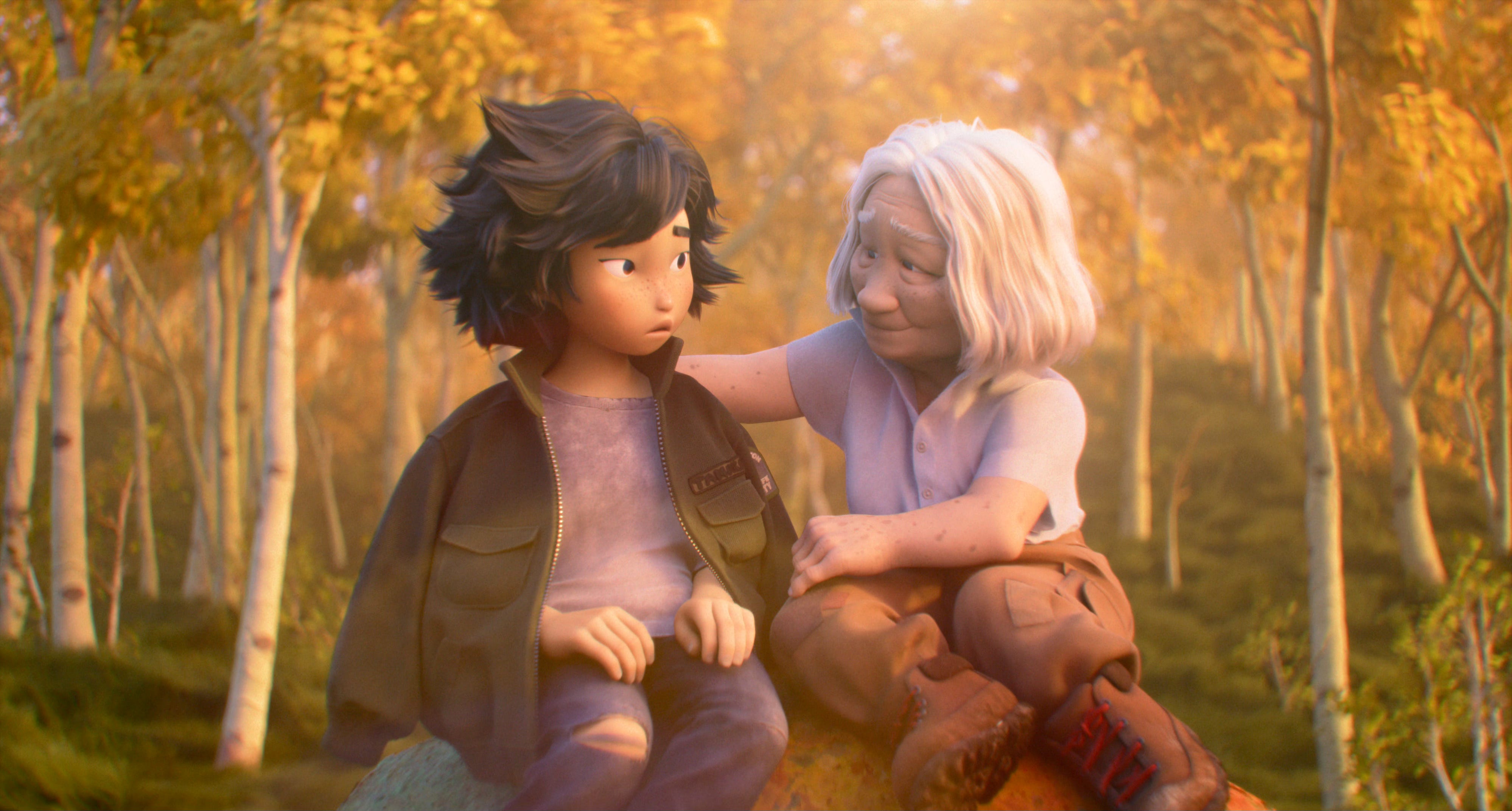
As a child, Mabel Tanaka (Lila Liu) found the imprisonment of animals in fishbowls and cages at her elementary school cruel and inhuman. So, as the film opens, off she tries to set them free for the umpteenth time before she is stopped by her school’s principal and teachers, and her mother is called in. Her mother (whose face is never shown) immediately dumps Mabel at her grandmother’s (Karen Huie) home outside the town of Beaverton before she ventures off to God knows where. It is here that Mabel learns the first of this hyperactive film’s many lessons as both grandmother and child sit by the glade right behind her home: “It’s hard to be mad when you feel like you’re part of something big.”
Years later, Grandma has passed away, and Mabel (now voiced by Piper Curda) is an angry, skateboard riding, class-cutting hellraiser, the bane on Beaverton mayor Jerry Generazzo’s (Jon Hamm) many plans to turn the woodlands surrounding the town into suburban tracts. His new project, the construction of a gigantic bridge that will connect downtown Beaverton to the rest of the world, could endanger Mabel’s beloved glade. Especially now that the animals that used to reside there have moved away. When she discovers that it takes only one beaver to replenish the glade’s habitat and that her professor is working on a technology that can transfer a human’s mind into a robotic animal (Avatar is gratuitously referenced in the dialogue), Mabel forces her way into the lab and manages to transfer her brain to a robot beaver. The rush is immediate, her senses heightened to the point where she can now understand the animals and speak to them, while retaining her very human worldview and senses.
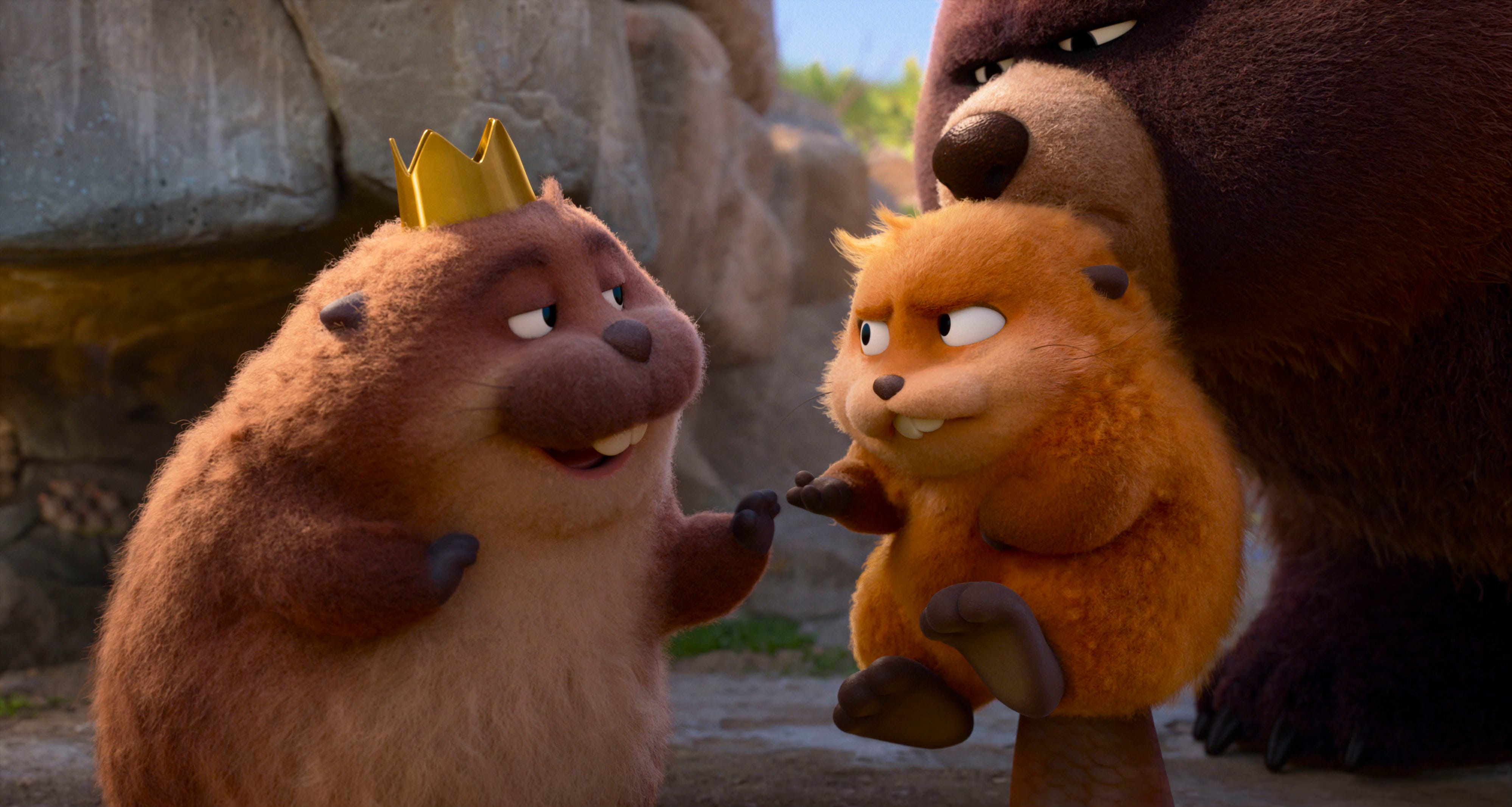
A worldview that will get her into trouble, first when she stops a bear from munching on an elderly beaver and later on in the film when she unwittingly encourages a violent revolt against the humans. Mabel discovers that the glade’s inhabitants have moved to a new spot ruled by beaver George (voiced by Bobby Moynihan), the king of the mammals, and that in stopping nature from taking its course with that elderly beaver she has violated the “Pond Rules.” But George is a good-natured soul, a diplomat, a leader who knows everyone by name and who believes in the power of community. He befriends Mabel because he sees something unique in her; and even though she is at first captivated by this ecosystem she and her fellow humans have taken for granted, Mabel, like any human, takes advantage of the trust placed upon her by George. She successfully convinces George and his community to repopulate the glade. But when Mayor Jerry once again displaces these animals from the glade, Mabel, in her anger and zeal, sets off a chain of events that could very well end in tragedy for the animals she befriended and for the residents of Beaverton.
The pacing turns frantic once the die is cast by the different animal kingdoms, director Daniel Chong, writer Jesse Andrews and the entire animation team finding ways to balance that darkness with insane car chases (one of them involving a shark named Diane airlifted by an army of albatrosses) and even some body horror-driven humor (which sounds like an oxymoron but isn’t). That the film ends in a kumbaya note where humans and animals learn to get along shouldn’t come as a surprise. After all, this is a film that also bears the imprimatur of the Disney mothership. But, after recently stumbling across the ending of A Bug’s Life on cable, I couldn’t help but think how far Pixar has gone from those early days when working class ants rose up against their oppressor to Hoppers’ more optimistic, uplifting dénouement where we can forgive the powers that be that are out to harm us. Even Zootopia 2, a product of Disney’s Animation Studios, feels far more radical in its family-friendly critique of the ravages of gentrification on a marginalized community than Hoppers.
Maybe I should be applauding the fact that Chong and Andrews are being deliberately ambivalent about their characters, especially Mayor Jerry. Portrayed at first as a smarmy, publicity seeking, sometimes ruthless bureaucrat and yet beloved by the community, Jerry’s 180-degree turn in the film’s final scenes is too pre-determined, too tied to the need of finding something redemptive in his character.
Equally problematic at times is the film’s depiction of Mabel’s innate anger, a quality that at times makes her welcomingly unsympathetic to the adults in the theater but which may be head-scratchingly confusing to the kids in the audience…although to be quite honest, the kids at the press screening I attended were far more concerned with George, which may be the point after all. While Andrews’ script, Chong’s direction and Curda’s spot-on voice performance credibly portray the frustration of being the lone soul fighting solo against injustice and the dark places that anger will lead you, it never digs deep at its source. Is it because Mabel feels abandoned by her mother? We are never given much in terms of a family history, either; Mabel’s anger has no root cause, it just is.
Even with those caveats, I found Hoppers to be that much more cohesive narratively than Elio. It might not deliver the emotional wallop that Luca and Turning Red did —Pixar productions that were unfairly exiled to the land of streaming—, but for the wee ones, Hoppers does deliver the anthropomorphic goods as well as madcap action. And maybe they will learn a thing or two about cohabitation and getting along. God knows they need to hear that positive message in a topsy-turvy world like ours.